Walk right into a nicely-run assisted dwelling neighborhood on a weekday morning and you’ll listen coffee grinders, see recreation bands draped over chair backs, and seize a whiff of pancakes from the bistro. Residents cross at their possess velocity. Some shuffle at the same time to a stability type, others linger over the newspaper. Now step right into a devoted reminiscence care regional. The vitality shifts. The house is quieter and greater managed, hallways are shorter and loop returned on themselves, and there are visual cues around the world you appearance: a shadow field outside every one room with circle of relatives graphics, contrasting paint on the rest room doorway, a basket of folded towels at a desk to busy the palms of anybody who used to paintings in hospitality.
Those alterations usually are not cosmetic. They’re intentional layout responses to very diversified demands. Families continuously bounce their seek with the phrases assisted residing, then uncover reminiscence care later when a discern starts off to wander, mistake day for night time, or emerge as agitated by way of noise and confusion. Even for execs in senior residing, the line between those types can blur given that many campuses be offering either. The clearest method to inform them apart is to take a look at the ecosystem. Design shapes every single day life.
Two care fashions that share a roof, not a blueprint
Assisted living grew out of a choice to substitute institutional nursing properties with areas that feel like domestic. The promise is independence with a defense internet. Residents have individual apartments, their very own furnishings, and keep watch over over their exercises. Staff give lend a hand with bathing, dressing, remedy, and meals, and they coordinate transportation and pursuits. The setting helps choice and style. The dining room would possibly have three menus, the courtyard a tomato patch and chess tables, the corridors long adequate to make brisk walkers pleased.
Memory care constructed later, out of difficult lessons. People residing with Alzheimer’s or other dementias do no longer enjoy the equal buffet of alternate options. Too lots selection can create nervousness. Long hallways invite elopement. Loud eating rooms intent sensory overload that ends up in refusal to devour. Designers and operators begun to ask a distinctive set of questions: what enables somebody with brief-term reminiscence loss really feel grounded, and what reduces danger with out stripping dignity?
That query ameliorations the whole thing from the shade of the carpet to the sightlines from the nurse station.
Wayfinding that works with the mind, no longer opposed to it
A user in assisted residing relies on favourite thoughts to navigate: read the room wide variety, payment the elevator signal, turn at the portray of a sailboat. If she receives misplaced, she can ask on the entrance table. In reminiscence care, those tactics fray. Reading comprehension can differ by using the hour. Abstract artwork confuses other than guides.
The outfitted surroundings compensates. You’ll see short, looping corridors that always go back citizens to a known house. The intention is to put off dead ends and lengthy instantly runs that suppose like tunnels. Room entrances stand out with top-evaluation paint at the doorframe, resembling a abode’s front door as opposed to an alternate anonymous panel. Next to each door, a memory container holds just a few tactile objects and portraits from the resident’s life: a miniature fire truck for a retired firefighter, cloth swatches for a seamstress, a picture from a marriage day. Those cues do more than assistance any one find a room. They spark micro-moments of attractiveness that calm the apprehensive components.
Signage in memory care relies on icons and undeniable words, not cursive fonts. Think of a toilet door with a common toilet image and the observe “Bathroom” less than in good sized print, positioned at eye level. I once watched a resident in slight-degree dementia walk prior two doorways labeled “Restroom” devoid of a glance, then march optimistically into the 1/3 when her daughter taped a snapshot of a sink next to the maintain. Validation beats education.
In assisted dwelling, wayfinding targets for taste and readability. Residents can care for a bigger campus footprint, varied wings, and elevators sprinkled for the time of. They get advantages from seating nodes below home windows in which associates evidently end to chat. In memory care, these resting spots nevertheless exist, however they may be put at predictable durations and as a rule embrace calming props: a folded quilt to stroke, a basket of plush scarves.
Safety with the aid of design, now not lockdown
People pay attention that reminiscence care is “protect” and graphic bars on home windows. The truth is greater nuanced. The objective is to permit movement inside a safe perimeter and to make safe practices very nearly invisible. After a decade of jogging these spaces, I’ve seen that the high-quality memory care groups are nonetheless, inside the literal feel. No slamming doors, no harsh alarms. Doors in general use delayed egress hardware that signals crew if driven but offers time to redirect with a pleasant face rather than a blaring siren. Outdoor courtyards sit down thoroughly enclosed by the building or a discreet fence, with jogging paths in a easy loop and gates that look greater like lawn trellises than an go out.
Floors in memory care have matte finishes to limit glare, which men and women with dementia can interpret as wet or choppy. Patterns are small-scale and coffee comparison. A high-assessment border, principally person who feels like a black mat, is usually perceived as a hole and motive any person to freeze. You be taught those particulars by observing citizens discontinue of their tracks at a decorative threshold. In assisted dwelling, floors will likely be greater adventurous. Designers use place rugs to sector seating, and richer shade palettes create sort. Slip resistance concerns in all places, however the visible psychology is much less fraught.
Kitchens in memory care are a one of a kind story as properly. You may possibly see a residential-genre kitchen used for supervised sports like baking cookies, however the stoves lock. Secure remedy rooms hide in the back of body of workers-in basic terms doors. Laundry apparatus, if obtainable to residents, involves projects like folding and sorting in place of operation of machines. In assisted living, you’ll find greater autonomy. Many flats have kitchenettes with microwaves, and some residents insist on cooking breakfast on a portable griddle. Staff screen, yet independence is the unfairness.
Apartments that act like nests
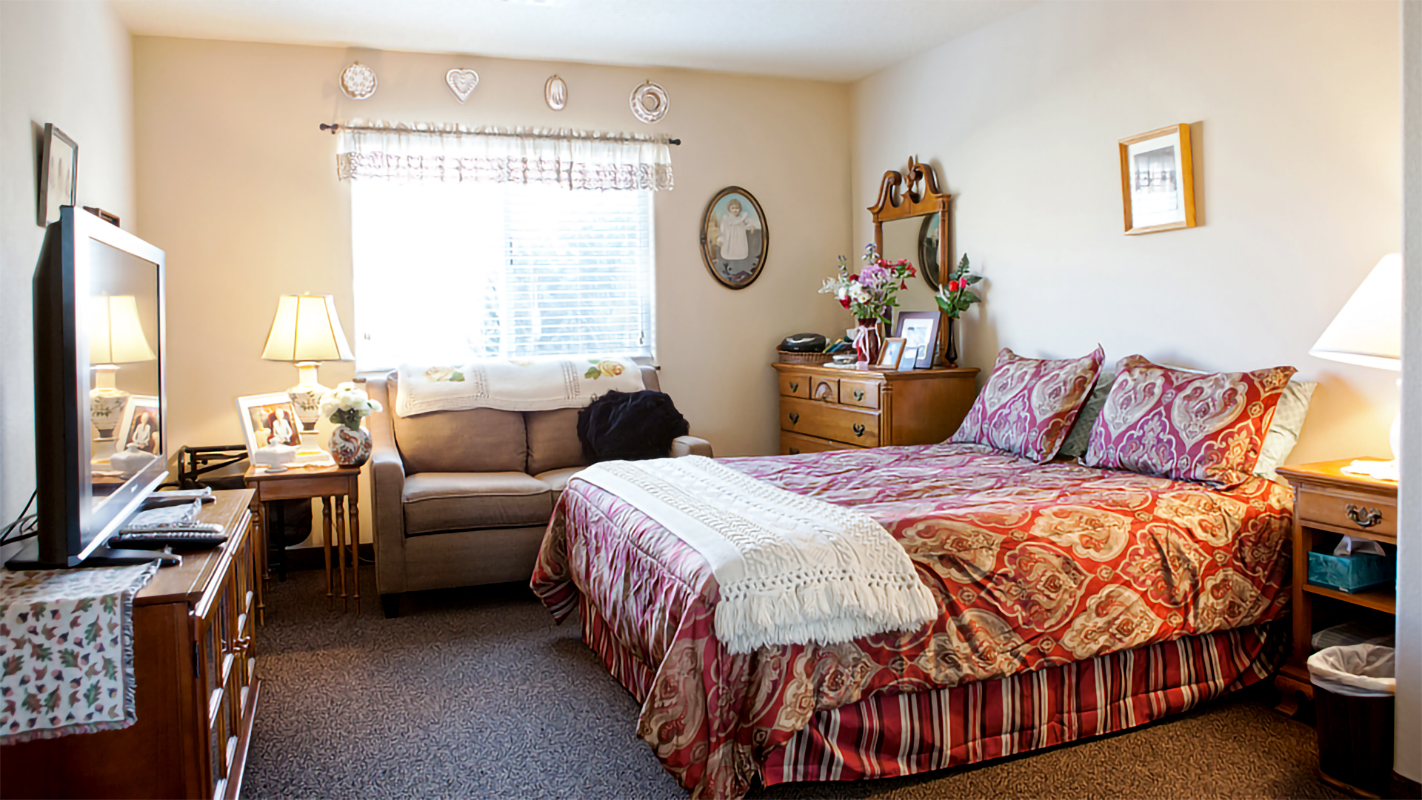
Assisted living residences most commonly mimic small condos. One-bedroom instruments with a dwelling room, bedroom, kitchenette, and a private tub be offering a experience of commonplace life. Closets can retain more than a season’s price of garments. The front door will be a couple of turns down a corridor from the elevator, and that’s positive. Residents prepare fixtures https://jsbin.com/sunehenuru round their habits: a examining chair by the window, a TV at simply the top perspective for physical activities.
Memory care flats skew smaller and more effective. Less space manner fewer chances to lose objects and much less energy spent moving from room to room. Private bathrooms are sized for workers tips, with roll-in showers, built-in benches, and take hold of bars put the place a man certainly reaches. The bathroom contrasts with the floor and wall shade, so it sticks out. Lighting is vivid however gentle, mainly with circadian tuning. You received’t see complete kitchens. Hotplates and ovens invite hazard for somebody who forgets they may be on. Storage is shallow and equipped. A resident with dementia can put out of your mind that models exist if they are out of sight, a phenomenon often known as agnosia. Open shelving or mesh-the front cupboards let a person to test visually and discover a sweater or a fave mug with out rummaging.
The transformations maintain at the door. In reminiscence care, personnel can override locks to go into in the time of a fall threat position. Doors might car-practically keep a peaceful sound envelope. In assisted residing, citizens commonly have classic keyed or fobbed entries, typically even deadbolts, and team knock and wait like site visitors.
Dining that respects sensory changes
Food anchors the day, notably as other routines fade. The noise, lighting, and tempo of dining spaces could make or holiday a community.
Assisted dwelling eating rooms attempt for sort. You may well have breakfast served from 7 to 9:30, lunch with three entrees, and a soup and salad bar. Tables for 2 and 6 combine social vigor. Staff take orders like a restaurant, and residents linger. Bright chatter is a part of the charm.
Memory care eating is quieter and more dependent. Smaller rooms lower reverberation. Table surfaces evaluation with plates, so the food pops visually. White mashed potatoes on a white plate can vanish for an individual with visible processing ameliorations. Adaptive utensils seem to be common yet feature moderate curves or better handles. Staff plate nutrients in user-friendly, separated presentations to lower selection fatigue. Finger ingredients get extra consciousness than you would possibly assume, not on the grounds that citizens are dealt with like infants, however because many americans with dementia lose self belief with utensils. A slider, baked bird strips, and roasted greens minimize into hand-friendly portions permit anybody to devour independently longer.
Time topics too. Some citizens are hungriest at 10 a.m. and 4 p.m. Appetite can dip at noon. The better memory care groups run snack carts with protein-wealthy features and tailor mealtimes to the resident’s circadian rhythm. I once worked with a gentleman who had been a night time shift mechanic. We stopped battling his 11 p.m. hunger and as a replacement wrapped a warm breakfast burrito every one night time with his trendy salsa. Behavior worries dropped by 0.5 inside a week.
Activity programming that builds on procedural memory
Assisted residing calendars are eclectic: yoga at nine, a lecture on neighborhood records at two, a bus time out to the farmer’s market on Saturday. Residents make a choice what they like and pass the relaxation.
In reminiscence care, the day is paced more intentionally and leans on procedural reminiscence, the kind that persists whilst quick-time period reminiscence falters. Folding warm towels, sorting buttons by way of colour, watering herbs, or sanding a block of picket supply function and soothing repetition. Music exhibits up far and wide, and with right explanation why. Familiar songs pale up mind areas that stay resilient in dementia. A resident who can’t don't forget breakfast will sing each and every verse of a Johnny Cash song observe-best possible. Activities are much less about novelty and greater about ritual. The Thursday baking crew will become a lighthouse in the week, even if residents can’t name the day.
Staffing follows swimsuit. Assisted residing recreation administrators think extensively and take care of a crowd. Memory care existence enrichment calls for close remark of members and constant adjustment. A awesome reminiscence care software seems to be quiet on paper but feels busy in someone, with a good deal of micro-engagement: a 5-minute hand massage the following, a lap across the courtyard there.
Staffing ratios and education that mirror complexity
One of the such a lot important ameliorations is invisible on a journey sheet: staffing. Assisted living might run with a ratio that assumes residents deal with quantities in their day independently. Overnight team of workers could conceal varied flooring, responding as wanted. In memory care, greater arms are required, certainly for the period of “sundowning” hours in overdue afternoon. Teams are skilled in de-escalation, validation, and communique options that prioritize emotion over logic. Instead of correcting, they sign up. If a resident anxiously insists she need to capture a bus to work, a trained caregiver may well present to aid % a lunch, then suggest they sit mutually at the same time the bus warms up. Ten minutes later, when the anxiety has passed, the bus becomes a memory and the day can movement on.
Medication administration differs too. Assisted living residents continuously self-administer specific meds with oversight. In reminiscence care, workforce by and large cue or administer most medicines to make certain safeguard and compliance. That shifts staffing patterns in the direction of extra treatment technicians for the time of peak times.
The position of technologies is supportive, no longer intrusive
Technology can embellish the two settings, however it may want to recede into the history. Wander leadership in reminiscence care may well use discreet ankle bands or cameras in fashionable places monitored without turning the space right into a surveillance sector. Motion sensors in toilets can cue team of workers if any individual is susceptible to falls, and mattress sensors can alert if a resident who often sleeps soundly has been up dissimilar times, signaling a urinary tract inflammation or affliction. In assisted living, wearable pendants and clever residence aspects like voice assistants give a boost to independence. Residents can say “activate the lighting fixtures” or “call the front desk,” and the process does the relax. The guiding idea is preference: technology deserve to certainly not corral citizens into a single means of residing.
How respite care suits into the picture
Families mostly find out the transformations between assisted residing and memory care via respite care. A respite continue to be is a brief-term, supplied stay that presents caregivers a holiday or shall we any person “experiment force” a group after a medical institution discharge or throughout the time of a relatives travel. In assisted residing, respite suits people that can persist with recommendations, have fun with workforce nutrients, and go correctly without regular cueing. Think of a senior convalescing from a hip alternative who desires guide with bathing and healing for a month.
In memory care, respite care appears to be like varied. The consumption method contains a detailed existence tale and habit inventory. Staff study that Mr. Alvarez not ever wears long sleeves considering he grew up in Oaxaca, that Mrs. Chen beverages heat water no longer chilly, that Mr. Patel prefers cumin over cinnamon in oatmeal. Those small details remember. The first 48 hours will probably be bumpy for a person who doesn’t recognise the condo and wonders wherein the family members went. Memory care teams plan for that with one-to-one make stronger, common music on the all set, and a simplified atmosphere. Success is measured via alleviation and engagement, now not through the variety of outings.
Respite might also clarify lengthy-time period wishes. If wandering or agitation becomes a day to day defense hazard all the way through a respite in assisted living, it’s a sturdy signal that memory care is the suitable subsequent step. Conversely, an individual with moderate cognitive impairment, nonetheless orientated and social, may additionally thrive at some stage in an assisted dwelling respite, highlighting a window of time while assisted residing is just right and a good idea.
Family life contained in the design
Families play in another way in every one space when you consider that the environments invite specific varieties of visits. In assisted dwelling, families most likely meet within the condominium, convey board video games, walk to the community bistro, or take a ride off campus. In memory care, visits may go optimum in typical locations curated to spark reminiscing: a small “the front porch” vignette with a rocking chair and a display screen door, or a workshop nook with safe hand methods and a pegboard. Children do nicely with realistic, tactile routine, like putting clothespins in a tin or “assisting” water flowers. Grandchildren who be aware of how you can stick with the resident’s lead, other than quiz for proof, uncover it less complicated to glue. The house cues the ones patterns by what it supplies.
The ambiance additionally helps own family educating. I’ve stood with daughters who in the end understood their father’s nerve-racking pacing when they saw the visible drift of the reminiscence care hallway with its loop and the approach team of workers evenly matched his steps. In assisted residing, a son learns the weekly rhythm of his mom’s bridge team and plans his visits beforehand. The structures provide scripts for achievement with out a notice of instruction.
Design data that count extra than a chandelier
A few micro-options perpetually separate strong reminiscence care from popular senior housing:
- Contrast wherein it counts: bathroom seats, clutch bars, dishware, doorframes, and gentle switches stand out opposed to their backgrounds to support the eyes and brain work collectively. Lighting that respects the clock: shiny, blue-enriched light inside the morning to cue wakefulness and warm, scale down pale in the night to cut down agitation. Handrails at the appropriate top: non-stop rails down corridors strengthen mobility and rhythmic taking walks, with heat picket that seems like a domicile handrail, no longer a clinic bar. Shadow boxes and customized entry spaces: these anchor identification and relief wayfinding, turning a bed room door right into a the front door. Purposeful props: baskets of laundry, device caddies with riskless models, doll healing for folks who respond, and tune players preloaded with in demand playlists.
Each of those aspects appears modest, however jointly they ease everyday living. In assisted living, you possibly can still see comparison and properly lighting, but there’s extra room for flourish: chandeliers over the dining room, art that invitations discussion instead of cueing movement, and architectural drama like a two-story lobby. In reminiscence care, drama factors disorientation. Calm is the purpose.
Cost, price, and the quiet economics of attention
Families probably ask why reminiscence care costs extra than assisted living seeing that the residences will likely be smaller. The resolution lies in exertions, practising, and programming intensity. The environment is one piece, yet staffing ratios, really good food, and additional security procedures upload to operating expenditures. A commonplace reminiscence care group has a smaller census than an assisted residing floor, yet it consists of equivalent or larger team phases throughout all shifts. Attention is pricey, and reminiscence care is consciousness-dense by using layout.
Value is most suitable measured through effects that remember to the grownup. Fewer falls, more suitable sleep, less agitation, and more moments of connection sound comfortable until you’ve lived the replacement. I’ve watched a resident movement from a regularly occurring assisted residing ground in which he often known as his daughter ten times a day in distress to a memory care neighborhood the place he stopped wearing his mobilephone on account that he at last felt anchored. The built atmosphere did that, together with knowledgeable other folks and thoughtful exercises.
When assisted residing remains to be the excellent fit
It’s tempting to jump straight to reminiscence care at the 1st signal of forgetfulness. That can backfire. For person in early-degree dementia who nevertheless drives, chefs, and enjoys communique, assisted living would offer precisely the proper balance of guide and autonomy. The condominium sounds like abode, the social stimulation assists in keeping the brain energetic, and personnel can monitor variations through the years. The key's to evaluate candidly: is there a development of leaving the range on, getting misplaced outside, or mismanaging medicines in a way that negative aspects harm? Is there nighttime wandering that scares the kin? Does sensory overload derail foodstuff? If definite to a couple of, reminiscence care deserves a look. If not, assisted dwelling with decent oversight, perchance paired with brief respite remains in reminiscence care to build familiarity, can stretch the window of independence.
Evaluating groups because of an environmental lens
On excursions, ask to take a seat, now not simply stroll. The sense of a place famous itself in the event you discontinue and watch. In assisted living, do citizens analyze ease charting their possess day? Is there alternative with no chaos? In memory care, does the distance breathe? Are there locations to walk with no encountering barriers? How do workers reply to a resident who repeats a query? Tone topics as a great deal as phrases.
Look for signs that the ecosystem has been tested by using authentic life. Scuffed baseboards at handrail height mean workers are making use of the helps. A effectively-thumbed sport basket capacity this is more than a prop. Plates that don’t in shape a catalog picture is probably there seeing that residents eat higher from them. Ask how usually families consult with and wherein they like to sit down. Visit at 4 p.m., a primary force point for agitation generally known as sundowning, and spot how the distance and personnel absorb the vigor. If the tour in simple terms takes place at 10 a.m. on a Tuesday, you’re seeing the premier foot forward.
The human layer on higher of the blueprint
Design units the stage, yet other people carry it to lifestyles. A memory care workforce can soothe a stormy afternoon in tactics walls by no means will, and a heat assisted residing concierge can turn a cavernous foyer into a universal dwelling room. Still, when the environment fights the mind, absolutely everyone lines. When it helps the mind, the crew’s talent shine and citizens’ strengths exhibit because of. I shop a intellectual photograph of a reminiscence care backyard from just a few years in the past. The route wound lightly lower than a pergola heavy with wisteria. A guy who were a mail carrier paced that loop for twenty minutes day to day like a path he as soon as knew with the aid of heart. No one instructed him to exercising. The house just invited it, and his physique remembered how.
That is the quiet genius of great design in senior dwelling. Assisted living environments invite autonomy and type. Memory care environments invite familiarity and calm. Both purpose for dignity, simply through exceptional routes. Families choosing between them don’t desire to turned into architects, yet they do benefit from wanting carefully at how a group’s spaces predict the reasonably days their adored one can have. When you’ve visible sufficient of those areas, you discover ways to confidence the rooms that make your shoulders drop and your breathing slow. If the gap places you comfortable, it can probably do the equal for the person you adore.
BeeHive Homes of Albuquerque West
6000 Whiteman Dr NW, Albuquerque, NM 87120
(505) 302-1919